
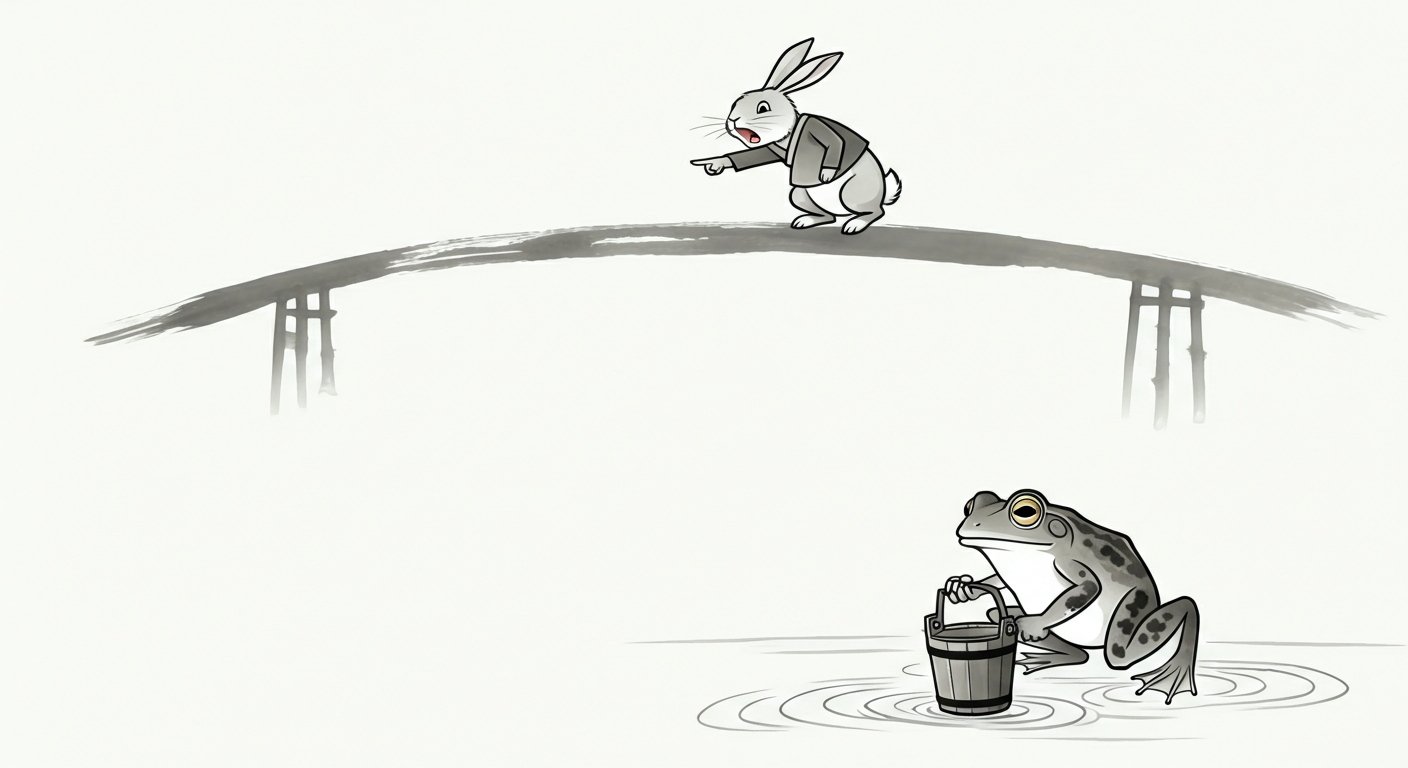
“The flowing river never stops, yet the water is never the same.” This classic Japanese wisdom reminds us that change is the only constant. By embracing this, we can release the labels we place on others and find freedom in the present moment.
ゆく河の流れは絶えずして、しかももとの水にあらず(Yuku Kawa no Nagare wa Taezu shite, Shikamo Moto no Mizu ni Arazu )
Pronunciation: Yoo-koo kah-wah noh nah-gah-reh wah tah-eh-zoo shee-teh, shee-kah-moh moh-toh noh mee-zoo nee ah-rah-zoo.
Meaning: The river flows endlessly, yet the water is never the same; everything is in constant flux.
Difficulty Level: ⭐⭐⭐⭐⭐/Advanced (N1)
Behind the Phrase
This iconic opening line comes from Hōjōki (The Ten Foot Square Hut) by Kamo no Chōmei, written in the 13th century. It captures the Buddhist concept of Mujō (impermanence). It is a poetic reflection on the transient nature of life, urging us not to cling to the past, as everything is in a constant state of transformation.
Author’s Insight
While relaxing in a hammock on Don Det Island in Laos, I spent hours watching the Mekong River. The river’s path remained the same, yet the water was always new, rushing toward the ocean and never returning. Watching that flow, I realized that we, too, are always in flux. Our bodies, our minds, and our relationships are never the same as they were yesterday. This insight turned into a source of comfort for me, proving that no struggle—and no stagnation—lasts forever.
English Dialogue
A: I just can’t get along with him. He’s always been so stubborn and narrow-minded ever since we started working together three years ago.
C: People change, you know. Maybe the person you’re clashing with today is someone who has evolved since three years ago. Why not try approaching him as if you’re meeting him for the first time?
Listen to the Dialogue
📝 Cultural Note for Japanese Learners
In the context of relationships, this concept teaches us to avoid “labeling.” When we label a person as “stubborn” or “difficult,” we stop seeing them as they are today. Kōun Ryūsui and Mujō remind us that people evolve. Approaching someone with a fresh mindset is the key to deep, authentic connection.
Wisdom & Summary
When we hold onto fixed expectations, we are essentially trying to step into the same water twice. By suspending our judgments and approaching our relationships with fresh eyes, we prevent misunderstanding and foster flexibility. Treat every interaction as if it were a new meeting. When you stop confining people to their pasts, you allow them—and yourself—to change, grow, and deepen your connection.
Old wisdom, modern takeaway: Every river flows anew, and every encounter is a chance to meet someone for the first time.