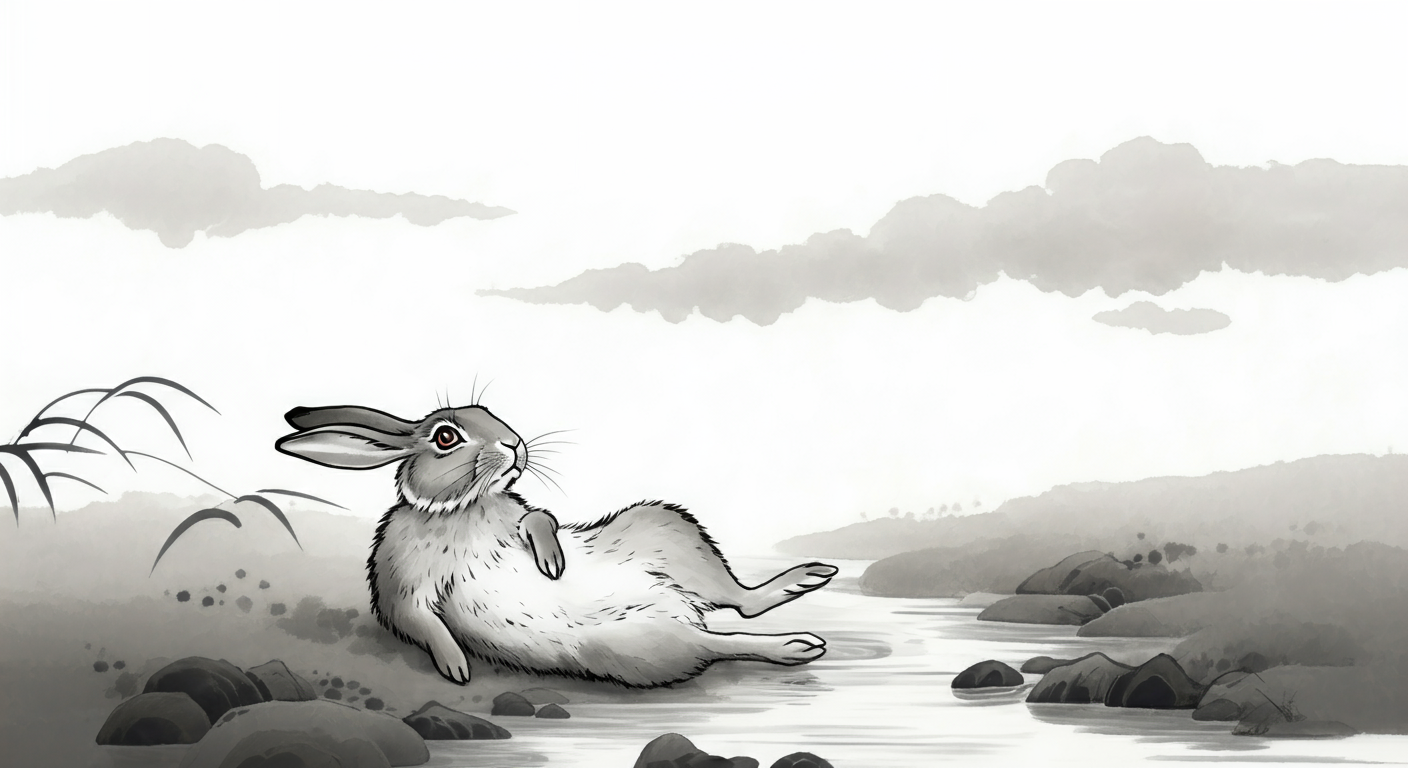
We often cling to our past investments and rigid plans, ignoring the fresh winds of opportunity blowing in front of us. “Kōun Ryūsui” teaches us the elegance of flowing like water and drifting like clouds, showing that letting go of control is often the only way to find true freedom.
行雲流水(Kōun Ryūsui)
Pronunciation: Koh-oon ryoo-soo-ee
Meaning: Drifting like clouds and flowing like water; living naturally without attachment.
Difficulty Level: ⭐⭐⭐⭐⭐/Advanced (N1)
Behind the Phrase
Kōun Ryūsui (行雲流水) literally translates to “Flowing clouds, flowing water.” It is a beautiful four-character idiom describing a way of living that is completely natural, spontaneous, and free from rigid attachments. Just as a cloud has no fixed shape and water naturally flows around obstacles, this phrase invites us to adapt gracefully to the changing currents of life.
Author’s Insight
While backpacking in Borneo, Malaysia, a fellow traveler invited me to cross the border into Indonesia on a whim. At the time, I had already bought a return flight ticket from another city. Following her meant letting that ticket go to waste.
Initially, I hesitated, trapped by the “cost” of the ticket. But then I realized that the true magic of travel lies in the unexpected. I decided to let go of the ticket and flow with the new direction. Because I chose that path, I was blessed with unforgettable encounters: a kind transgender guesthouse owner, proboscis monkeys, and even an invitation to a local wedding.
This isn’t just about travel itineraries; it is about life itself. Life is not a track where we must sprint to a fixed finish line; it is a river. Being able to relax and let ourselves be carried by a good wind, enjoying the journey of drifting, is perhaps the ultimate luxury of being alive.
English Dialogue
A: I’m so frustrated. I planned this perfect weekend trip with my partner, but everything fell through because of the rain. I feel like we just wasted our time and money.
C: I get the disappointment. But when you stop fighting the weather—and stop forcing a “perfect” plan—you might find a much warmer connection in just sharing the unexpected quiet.
Listen to the Dialogue
📝 Cultural Note for Japanese Learners
In interpersonal relationships, we often fall victim to the “Sunk Cost Effect,” clinging to old expectations of others just because we’ve invested time and emotion in them. Kōun Ryūsui encourages us to practice Epoché (suspension of judgment)—to bracket our expectations and accept the changing dynamics of our relationships with “Empathic Understanding.”
Wisdom & Summary
When we stop trying to force people or situations to fit our rigid blueprints, we free ourselves. This is not passive giving up; it is the Zen concept of Zuisho Sakushu (随処作主)—being the master of yourself in any environment. By letting go of the need to control the destination of your relationships, you remain as free as a drifting cloud, always at peace with where the current takes you.
Old wisdom, modern takeaway: Do not let the price of your past tickets keep you from boarding the wind that is blowing today.