
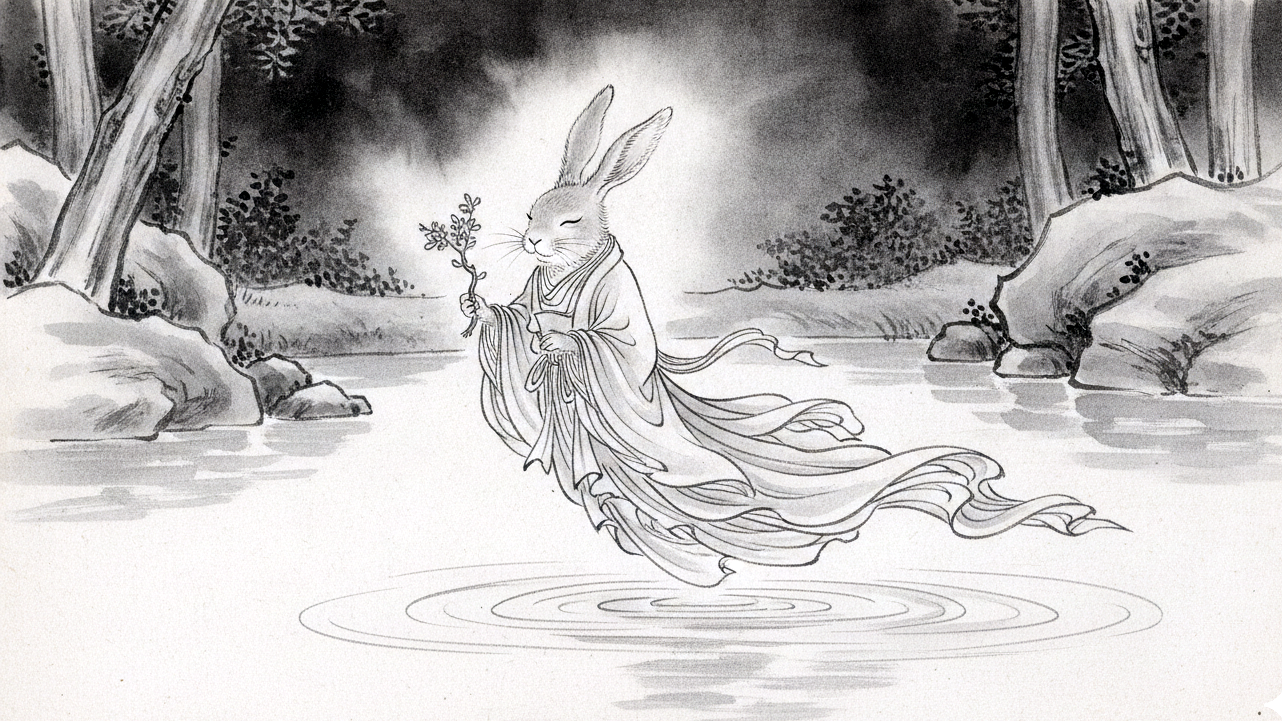
In a world where we constantly curate our image, we often forget that trying to be “perfect” builds invisible walls. Ancient wisdom reminds us that true connection happens when we drop the act and embrace our unadorned, natural selves.
天衣無縫 (Ten’i Muhou)
Pronunciation: Ten-ee-moo-hoe
Meaning: A state of natural perfection with no visible seams; unadorned and innocent authenticity.
Difficulty Level: ⭐⭐⭐⭐⭐/Advanced (N1)
Behind the Phrase
Ten’i Muhou (天衣無縫) translates to “Celestial robes have no seams.” Rooted in a legend that the garments of heavenly beings are woven without a single stitch, the phrase is used to describe something so natural and spontaneous that it leaves no trace of artificial effort. It is often used to praise an innocent, pure, and completely unpretentious personality.
Among the countless four-character idioms, this is my absolute favorite. The linguistic genius of the ancients is striking here: instead of directly praising the maiden’s beauty, they focused on her robe. By describing the garment as seamless and perfect, they indirectly yet powerfully captured the flawlessness of the maiden herself.
Author’s Insight
I witnessed this seamless beauty in a public square in Khiva, Uzbekistan. Surrounded by historic brick buildings, a young girl was bouncing a football, chasing it, and dancing playfully all by herself. She was completely oblivious to the eyes of others. Her innocent, Ten’i Muhou presence created a spontaneously beautiful scene that is forever etched in my memory.

English Dialogue
A: I always get so nervous meeting new people. I end up rehearsing what to say in my head, just to make sure they like me.
C: It’s exhausting trying to control what others think. But if you just drop the act and show your real, messy self, it actually gives them permission to relax and do the same.
Listen to the Dialogue
📝 Cultural Note for Japanese Learners
In Japanese culture, which often places a high value on reading the room (kuuki wo yomu), being Ten’i Muhou is a rare and highly admired trait. It represents a state of being completely free from the anxiety of how one is perceived, allowing one’s true nature to shine effortlessly.
Wisdom & Summary
We often worry too much about others’ evaluations—something we cannot control—and end up wearing heavy psychological armor. But when we constantly try to present a “flawless” version of ourselves, we inadvertently make those around us feel tense.
By removing these inner walls and interacting with others just as we are, we offer them a profound sense of relief. Our vulnerability tells them, “You are safe to be yourself here.” Let go of calculation and the need to impress. Dropping the act is the shortest, most genuine path to building relationships built on deep, unspoken trust.
Old wisdom, modern takeaway: True trust blossoms not when you hide your flaws, but when you drop the act and allow others to feel safe in your authenticity.